FlemingClans.com

"Scotland's Fleming Clan: a Genealogical History" - coming in 2027!
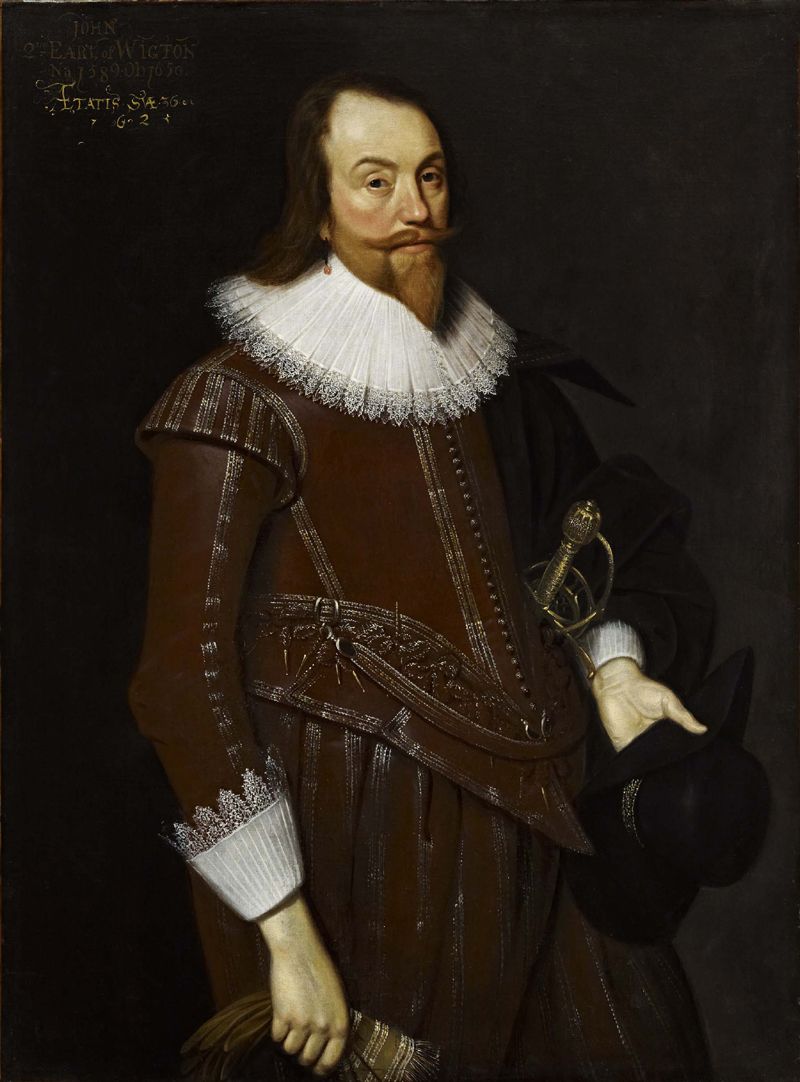 18th chief - John Fleming, 2nd Earl of Wigtown and 7th Lord Fleming
(1589 - 1650)
Basic information about this person: \click here\
John, 2nd Earl of Wigtown, was a Privy Councillor for more than thirty years. He signed the National Covenant in 1638, yet two years later his house at Cumbernauld gave its name to the bond in which Montrose and other nobles pledged to defend the king. He died as Scotland was about to be conquered by Cromwell.
Master of Wigtown
John was baptised at Kincardine Castle on 5 December 1589, the eldest son of John Fleming, 1st Earl of Wigtown, and Lilias Graham, daughter of the Earl of Montrose. He studied at Glasgow, and when his father was made an earl in 1606 he took the courtesy title of Lord Fleming, also styled Master of Wigtown.
He was given a share in managing the estates from an early age, and in 1616 he bought the barony of Denny. In March 1615 he sat as an assessor at the Glasgow trial of the Jesuit John Ogilvie, who was hanged and was later declared a saint. He was admitted to the Privy Council in 1617, and he succeeded his father as 2nd Earl of Wigtown in 1619.
Privy Councillor
For the next three decades John was one of the working members of the Privy Council. He sat on commissions to try thieves, murderers and those accused of witchcraft, to suppress Catholics, to inspect the highway between Stirling and Glasgow, and to carry out King Charles I’s Act of Revocation of church lands. In 1625 he attended the funeral of King James at Westminster Abbey, and on 18 June 1633 he officiated as Great Usher at the coronation of Charles I at Holyrood.
He spent much of the 1620s in a long lawsuit with the Earl of Cassillis over Kirkintilloch and other lands in Lenzie, the same lands the Flemings and Kennedys had fought over since the fifteenth century. In 1629 the quarrel spilled onto the streets of Edinburgh in a show of force by both sides, and in 1630 the Court of Session found largely in Wigtown’s favour.
Covenant and Cumbernauld Bond
When Charles I tried to impose a new prayer book on the Church of Scotland, the nation rose in protest. On 22 September 1638 John subscribed the National Covenant with other members of the Privy Council, and he was appointed to supervise its signing in Lanarkshire, Stirlingshire and Clackmannanshire.
By 1640 many moderate Covenanters feared that the Earl of Argyll was becoming too powerful. In August 1640 Montrose and seventeen other noblemen met at Cumbernauld, John’s house, and signed the Cumbernauld Bond, promising to uphold the Covenant while opposing the ambitions of “a few”. John was one of the signatories, and in April 1641 he was called before the Committee of Estates to answer for it.
Civil war
In 1641 the king named John a Privy Councillor again, and in 1643 Charles I wrote to him from Oxford urging him to support Montrose. John nevertheless served on the Covenanting committee directing the war in the south in 1644, and in 1648 on the committee of war for Peeblesshire. In 1647 he gave up the family’s hereditary office of usher in return for a promised payment of a thousand pounds sterling, which was never paid. In 1649 he petitioned Parliament for tax relief for his tenants in Lenzie and Auchtermony, who had suffered greatly in the wars.
Family and legacy
John married Margaret Livingstone, daughter of Alexander, 1st Earl of Linlithgow. Their children were John, his heir; Alexander; William, who became His Majesty’s Gentleman Usher; and daughters Jean, Eleanor, Ann and Lilias. He died at Cumbernauld on 7 May 1650. His nickname, “the Covenanter”, recalls the cause that dominated the last years of his life.